

Can Silicon Valley Construct A Secure Class 8 Truck? Early EV Semi Fires Expose The Expertise Hole


Assist CleanTechnica’s work by a Substack subscription, on Patreon, or on Stripe. Assist us produce all the high-quality, authentic content material we publish week after week regardless of the challenges of content-scraping AI, delinquent media, inflation, and different hurdles.
When you drove by the East Bay space of California on Tuesday evening, you most likely bought caught in a nightmare. A Tesla Semi touring down Interstate 880 in Hayward caught fireplace throughout the night commute. There was no crash, no multi-vehicle pileup, and no apparent collision. The motive force seen one thing was incorrect, pulled over close to Freeway 92, and bought out unhurt.
Then the lithium-ion pack did what high-energy battery chemistry does when it will get pushed previous its thermal limits… By the point crews completed foaming down the wreckage, all that remained of the tractor was its rear axles and a pile of ash.
The California Freeway Patrol shut down each instructions of the freeway out of concern over poisonous chemical smoke. Northbound lanes ultimately opened again up, however southbound lanes stayed closed for practically ten hours whereas fireplace crews managed the blaze and let the pack burn itself out. When the solar got here up, all that remained of the tractor was its rear axles and a pile of ash.
That is the second time in simply over two years {that a} single Tesla Semi has shut down a serious California freeway for half a day. Again in August 2024, a Tesla-operated Semi drifted off Interstate 80 close to Emigrant Hole, hit a tree, and caught fireplace. It took 50,000 gallons of water, air drops from Cal Hearth, and a 15-hour closure to clear the highway.
At any time when this occurs, the anti-EV crowd instantly pounces and claims electrical vehicles are rolling time bombs. That’s a lie, as we’ve repeatedly defined right here, however the knee-jerk response from tech lovers, which claims that is simply regular trucking enterprise, is equally disconnected from actuality.
One thing deeper is happening right here, and it highlights an vital cultural divide between Silicon Valley and the century-old world of industrial quality industrial trucking. As a substitute of trashing individuals and pointing fingers, let’s have a look at a deeper lesson the business can study from this.
The Numbers Lure
First, let’s have a look at the numbers earlier than anybody begins cherry-picking information.
Based on the Nationwide Hearth Safety Affiliation, US fireplace departments reply to roughly 15,000 massive truck fires each single yr. That’s about 40 diesel rigs catching fireplace on daily basis throughout the nation. Blown turbochargers spray oil on scorching exhaust manifolds, wheel-end bearings seize at 70 mph, and dragging drum brakes ignite recap tires. Diesel vehicles burn on a regular basis, so fireplace shouldn’t be a phenomenon distinctive to electrical vehicles.
The distinction is how they burn. When a diesel tractor catches fireplace, the native volunteer fireplace division can normally knock it down with an engine tank and a few foam in 45 minutes. A heavy tow truck drags the scorched chassis off the highway, sweepers clear the particles, and site visitors begins shifting once more earlier than the morning rush hour is ruined.
When an 800-plus kilowatt-hour industrial battery pack enters thermal runaway, the playbook goes out the window. The cells generate their very own oxygen as they break down, turning the battery right into a self-sustaining furnace. First responders can not simply drown it and stroll away. Their solely selection is to pump tens of hundreds of gallons of water on it for hours or stand again in defensive mode to maintain it from spreading whereas half a county will get gridlocked. At greatest, all they will do is hopefully cool it down sufficient to get it off the highway earlier than it’d catch fireplace once more.
Then there’s the pattern measurement downside. There are roughly 4 million Class 8 industrial diesel vehicles on American roads. In contrast, the energetic Tesla Semi fleet is estimated someplace between 150 and some hundred early-production and pilot tractors.
Mathematically talking, you can’t calculate a clear failure charge on an N of two. A single flat tire that catches fireplace and spreads to a battery pack can swing the statistical security file of a 100-truck pilot fleet by 50%. However you additionally can not ignore it when two vehicles in a tiny pilot fleet trigger catastrophic, 10-to-15-hour interstate shutdowns.
So, as a substitute of being lazy and counting on simply the numbers, we have to search for extra context.
The Startup Curse Isn’t Simply Tesla
This isn’t uniquely a Tesla downside. It’s an electrical startup downside.
Keep in mind Nikola? In the summertime of 2023, a number of of their Tre battery-electric vehicles caught fireplace, together with one at their Phoenix headquarters and one other in buyer testing. Nikola initially hinted at foul play, however third-party investigators shortly discovered the actual offender: a coolant leak contained in the battery packs equipped by Romeo Energy had induced an inner electrical quick. Nikola needed to situation a voluntary recall on all 209 vehicles that they had constructed, halting gross sales and dragging each pack again to the store to repair the design.
Startups strategy trucking like client electronics. They design from a clear sheet, prioritize most aerodynamic effectivity, combine elements into customized monolithic buildings, and transfer quick.
However, if you take the “transfer quick and break issues” strategy, the stakes are lots greater within the trucking world.
Class 8 trucking is a brutal atmosphere that eats intelligent concepts for breakfast. An enormous rig doesn’t reside the mild lifetime of a passenger automotive in sunny California. It flexes below 80,000 kilos of gross weight, takes violent torsional twisting over uneven loading docks, endures fixed low-frequency highway battering, and rattles throughout thousands and thousands of frost heaves.
If there’s a barely unfastened coolant quick-connect, an undersized wire harness, or a busbar that flexes half a millimeter below torsional load, industrial responsibility cycles are like Liam Neeson in Taken. When you’re an issue of any variety, the responsibility cycle will discover you, and it’ll kill you.
The Drawback Previous Faculty Truckmakers Saved Off The Freeway
This brings us to the normal truck builders. Why aren’t we seeing Freightliner eCascadias or Volvo VNR Electrics burning all the way down to the edges on I-80? They’re electrical, too, proper?
It’s not as a result of conventional truckmakers possess magical, fireproof battery chemistry. They purchase lithium-ion cells from the identical tier-one suppliers as everybody else. In actual fact, should you dig into public regulatory filings, different producers have run into the very same terrifying failure modes that bit Nikola.
So, how did they keep away from catastrophe?
In 2023, Volvo and Mack filed security recall studies with the Nationwide Freeway Visitors Security Administration (NHTSA) masking tons of of electrical vehicles. What was the defect? Their battery provider had two separate manufacturing errors: coolant strains that weren’t absolutely locked into place, creating the danger of conductive fluid leaking throughout cells, and over-torqued inner fasteners that would snap off and rattle round contained in the pack as unfastened metallic particles. Each defects created direct short-circuit and fireplace dangers.
Why didn’t you examine these vehicles burning down on the freeway? As a result of the so-called legacy producers have spent a century constructing institutional security programs.
They caught this downside when a small fireplace truly broke out in a battery pack within the manufacturing unit. The hearth stayed contained throughout the pack, however Volvo didn’t attempt to cover it or clarify it away. As a substitute, they did what the old-fashioned corporations do, even when it slowed them down. Inside every week, there was a stop-ship order on the packs and vehicles already on the highway have been known as in for a swap.
Conventional truckmakers transfer at a glacial tempo in comparison with Silicon Valley, and tech followers like to criticize them for it. However, that gradual tempo comes from many years of scar tissue earned in battle. When an old style builder sees an inner meeting error or will get an odd sensor studying in fleet monitoring, their reflex is to not push an over-the-air firmware patch and hope for the very best. They set off stop-ship orders, use their enormous seller networks to floor the fleet, file Half 573 defect notices with the feds, and tear the battery packs open in a service bay.
Their programs caught the defect within the store earlier than it had the prospect to catch fireplace on the freeway.
Monoliths vs. Modules
There’s additionally an vital philosophical divide in how these vehicles are packaged.
Tesla selected the moonshot strategy. To hit a 500-mile vary goal whereas hauling full freight, they wanted most vitality density and minimal tare weight. That led them to construct a large, built-in, structural battery pack that sits low between the body rails. It’s an engineering marvel in packaging effectivity, however additionally it is a monolithic block of vitality. If one part suffers an inner failure, the complete pack is in danger.
Conventional builders like Volvo and Freightliner (Daimler Truck) took a much more conservative, regional-haul route. As a substitute of packing practically a megawatt-hour of vitality right into a single tightly built-in structural meeting below the cab, they use smaller, lower-capacity modular packs—with Volvo actually hanging separate battery enclosures off the skin of the body rails the place diesel saddle tanks usually sit.
Hanging heavy battery containers on the facet of the chassis is horrible for optimum vary and provides pointless weight, and will depart them extra weak to collisions. However, from a security and repair standpoint, it’s good. The packs are bodily remoted from one another. If one module suffers a mechanical puncture, a coolant leak, or a thermal occasion, the harm is much simpler to comprise, examine, and unbolt.
Bridging The Hole
Silicon Valley introduced the heavy trucking business kicking and screaming into the electrical period. With out Tesla pushing the envelope on megawatt charging and long-range electrical haulers, diesel truckmakers would nonetheless be dragging their toes with compliance pilot packages, if even that.
Constructing an electrical truck that may pull 82,000 kilos isn’t just a software program downside, and it’s not only a battery chemistry downside. It’s a mechanical sturdiness downside that has to outlive thousands and thousands of miles of tough roads, tough drivers, and unpredictable working situations.
Skilled truck builders know easy methods to construct a chassis that survives that abuse, however they have been gradual to embrace the battery. Silicon Valley is aware of easy methods to construct the battery, however they’re nonetheless studying how punishing the highway actually is.
Till these two worlds lastly study from one another, fireplace crews are going to maintain having very lengthy nights on the interstate. Hopefully extra cross-pollination and expertise ultimately result in enhancements for all sides of the business.
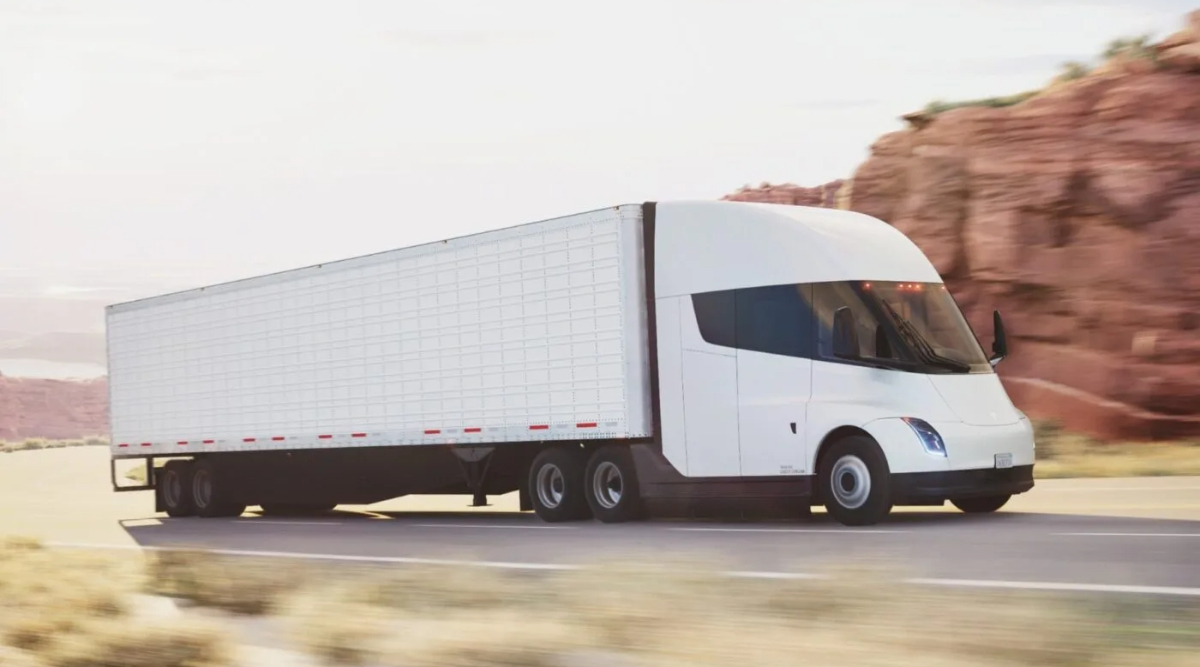
Featured picture by Tesla.
Join CleanTechnica’s Weekly Substack for Zach and Scott’s in-depth analyses and excessive stage summaries, join our each day publication, and comply with us on Google Information!
Have a tip for CleanTechnica? Wish to promote? Wish to recommend a visitor for our CleanTech Discuss podcast? Contact us right here.
Join our each day publication for 10–15 new cleantech tales a day. Or join our weekly one on high tales of the week if each day is simply too frequent.

CleanTechnica makes use of affiliate hyperlinks. See our coverage right here.
CleanTechnica’s Remark Coverage
